
A fragment of Spanish olive jar found during our excavations in advance of Edinburgh’s Trams extension reveals that this mediterranean luxury item was imported into Leith during the sixteenth-seventeenth centuries.
But not for cooking!
Rather it was used by apothecaries for medicinal treatments and for soap-making.
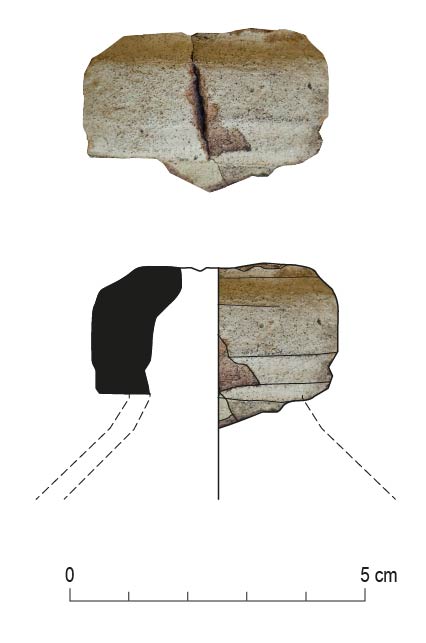
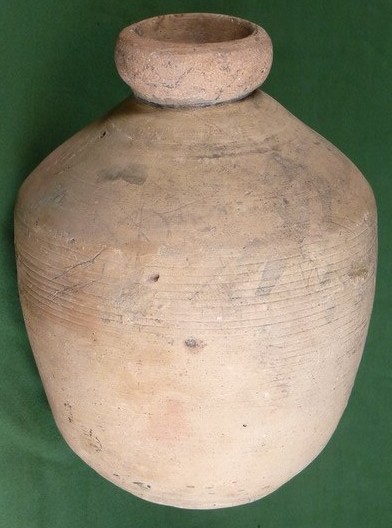
Spanish vessels and olive jars in particular have been recovered from other sites in Leith and Edinburgh and generally date to the sixteenth or seventeenth century. Olive jars are quite distinctive in shape and colour – they have a red/pink sandy fabric with an off-white to buff coloured slip on the exterior. A near complete vessel was found in 1984 at Newark Castle in Port Glasgow.
Trading during this period was heavily influenced by politics (as it is nowadays) and attempts were made by the Scottish Kirk to prohibit trading with Habsburg Spain and its dominions at the end of the sixteenth century. However, trade was restored a few years later and a regular trade was in place by the second half of the seventeenth century with Glasgow as the main port.
This trade carried on well into the following centuries, as evidenced by the collection of nineteenth century olive jars in Edinburgh Museum.
Other imported ceramics, evidencing trade with other parts of mainland Europe, include Rhenish stonewares (from the Rhineland of Germany) and cooking vessels from the Low Countries (Netherlands). Large ports like Rotterdam were used by Scottish merchants to buy these wares, and probably buying goods from Spain too when regular trade was prohibited.