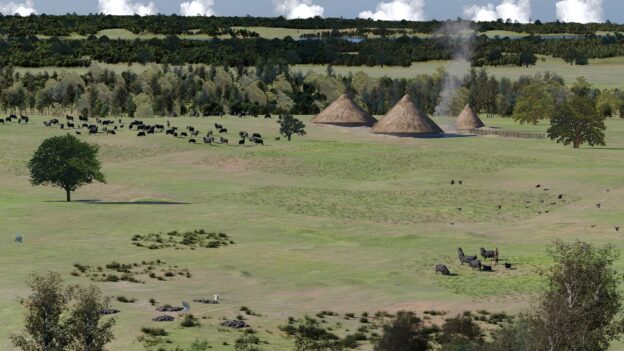
New house owners at Erskine in Renfrewshire may not be aware that they inhabit the same space where a hitherto lost prehistoric settlement once was. Mysteriously abandoned over three thousand years ago, the archaeological remains, long buried and forgotten, have been brought to light in a new publication.
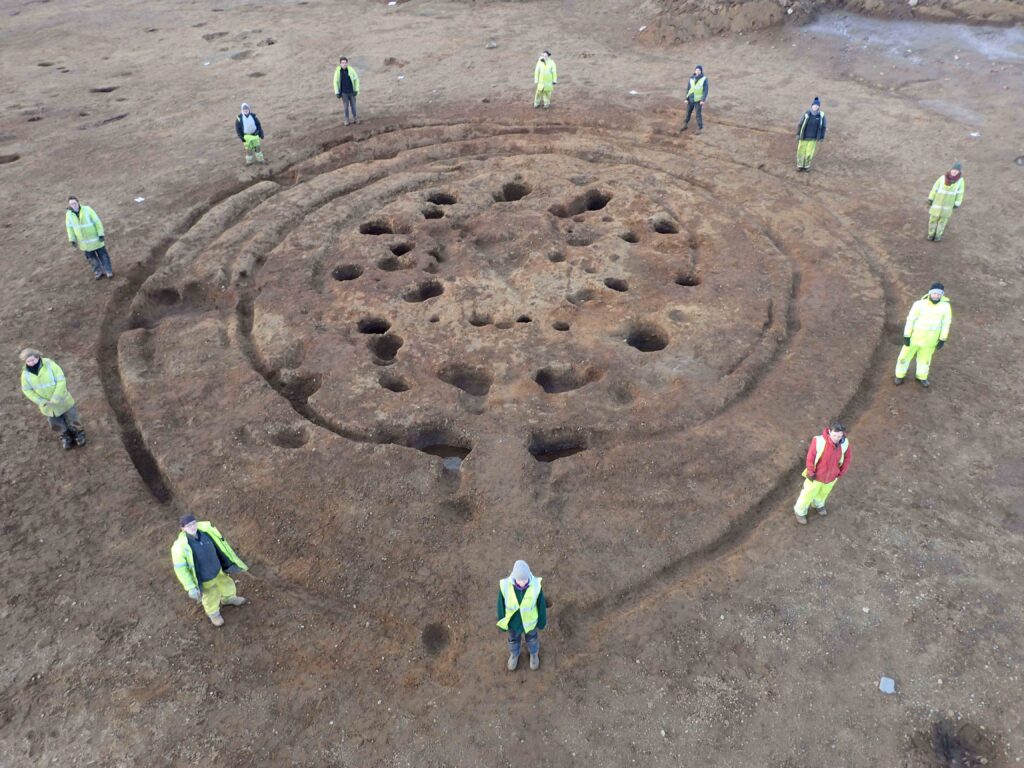
The discovery was made by GUARD Archaeology during archaeological excavations between 2018 and 2019, commissioned by CALA Homes (West) prior to construction of new houses at Northbar on the south-east outskirts of Erskine.
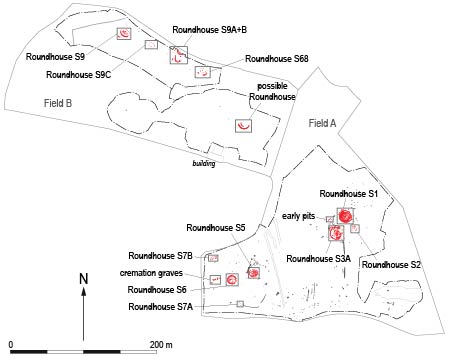
The archaeological evidence gathered at Northbar demonstrates that the site was occupied between 1500 and 1100 BC. Our team encountered the remains of 12 roundhouses strung out across the site, a settlement that had developed over several centuries. While only post-holes and trenches survived where roof-bearing posts and wattle-and-daub walls once stood, the scale of these demonstrate that some of these roundhouses were extremely large timber structures, likely the homes of large households of people.
The evidence gathered during GUARD Archaeology’s excavation has provided a rare insight into daily life during this middle Bronze Age period, from evidence of crop production and processing, animal husbandry, weaving, pottery-making, to the construction techniques for the large timber roundhouses these communities built.
Within the roundhouses burnt animal bones and charred barley and wheat grains attest to the farming of the surrounding open wooded landscape. Traces of animal dung were also found within two of the roundhouses, reflecting seasonal cohabitation of both humans and animals living together under the one roof. But a substantial quantity of hazelnut shells within one of these roundhouses also attests to the autumnal gathering and storage of wild food resources, possibly to sustain the household over the coming winter in the event of a bad grain harvest. GUARD Archaeologists have found evidence for famine and catastrophes amongst other Bronze Age communities in south-west Scotland, so winter starvation was no idle threat at this time.
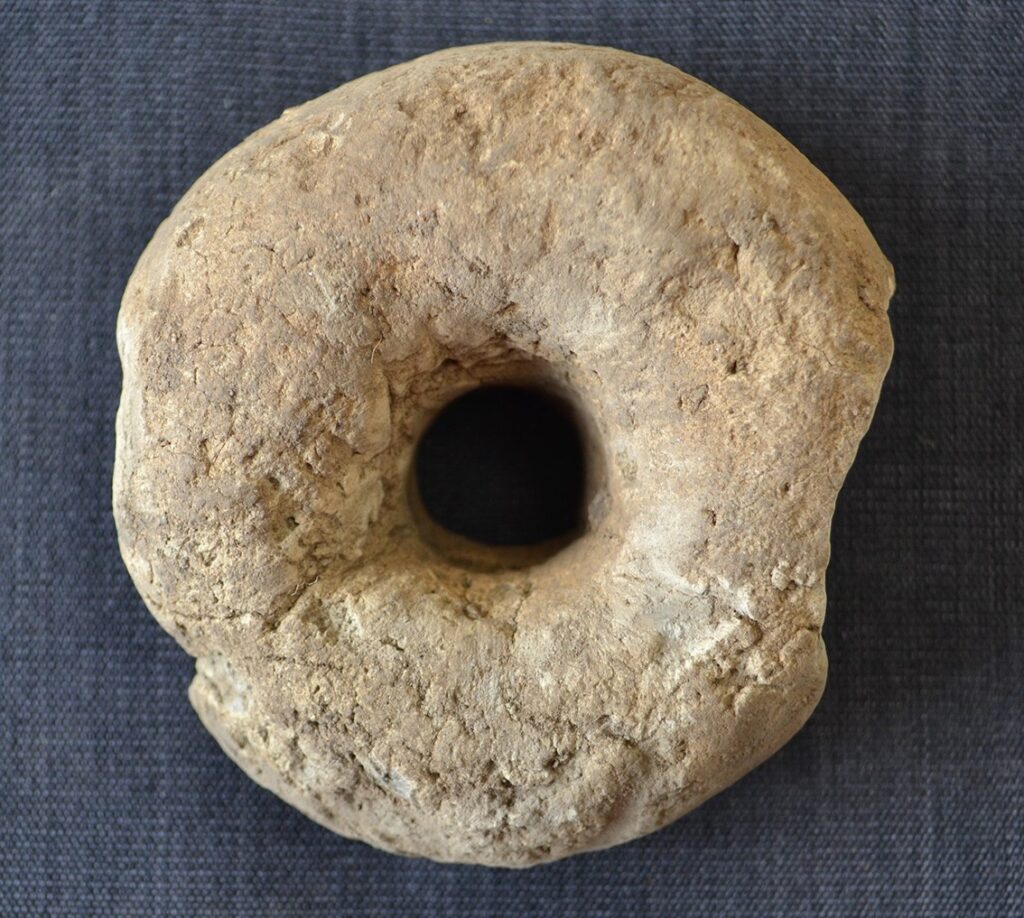
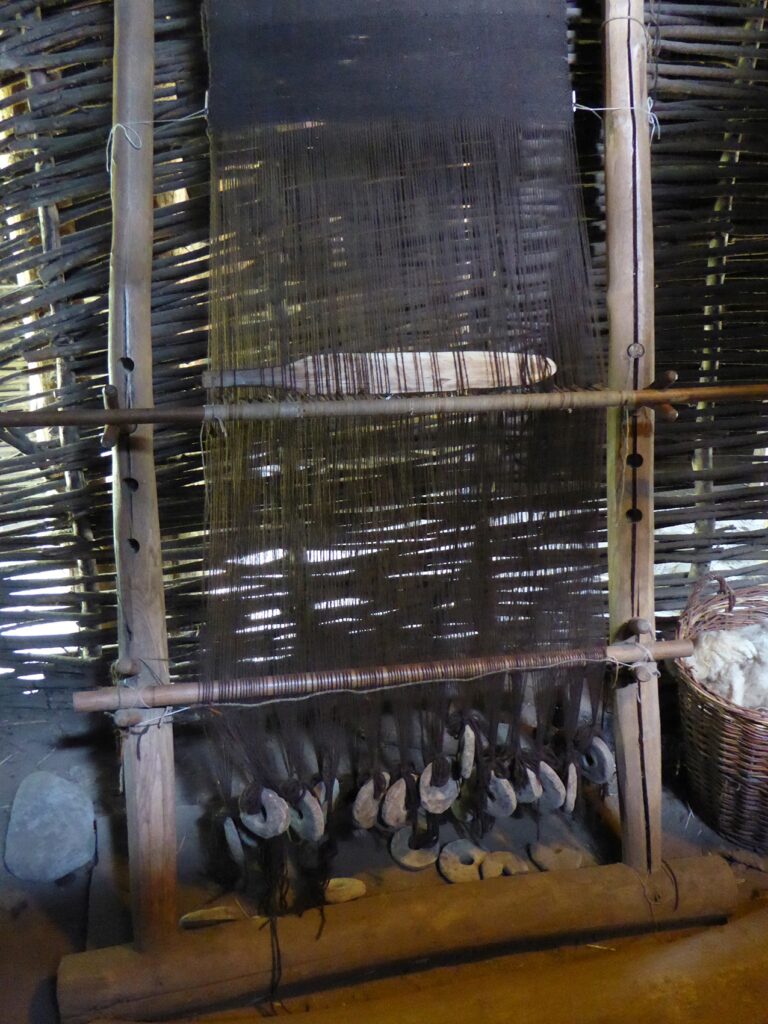
But the occupants were not just farmers. Several kiln pits, rare evidence from this period, were found within one of the roundhouses, demonstrating the manufacturing of pottery vessels within the Bronze Age settlement. Numerous clay loom weights attest to the weaving of woollen cloth too. This evidence demonstrates that the Bronze Age folk here crafted pottery vessels for the cooking and storage of food, and processed woollen yarn into clothes. While communities were well-connected with each other during this time, this evidence shows that they were also self-sufficient for the basic necessities of life.
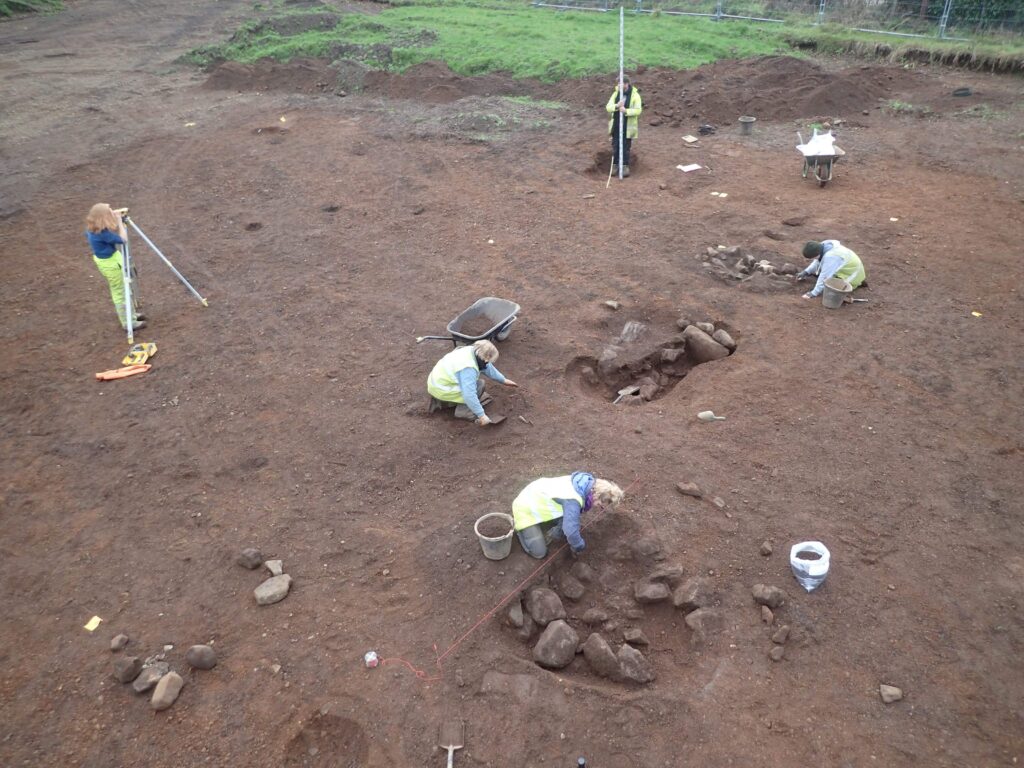
This was not the earliest activity at Northbar however. The GUARD Archaeologists discovered that a few centuries before the first roundhouses were built here, a small cemetery had been created in one corner of the site during the early Bronze Age. These graves contained the cremated bones of at least 9 people together with sherds of ceramic Beakers and Urns, that were buried alongside the dead to accompany them in the afterlife. It may even be that it was these graves and the reputation of the people buried here that first attracted a small Bronze Age community to settle on this site.

The Bronze Age settlement at Northbar seems to have drawn to a close around 1100 BC, but why this happened remains a mystery. There was no evidence of burning or destruction, and many similar settlements from this period such as discovered at Rosemarkie on the Black Isle and at Carnoustie in Angus similarly ended around the end of the Bronze Age. Communities moved on to other places in the landscape, and other than some ephemeral remains of Iron Age activity over one thousand years later and a fragment of a burnt cereal grain from the fifteenth century, there was no other trace of people on this site until the construction of CALA Homes’ new houses.
The archaeological work was funded by CALA Homes (West) and was required as a condition of planning consent by Renfrewshire Council who are advised on archaeological matters by the West of Scotland Archaeology Service. Now that the work has been completed, the project archive will be submitted to the National Record of the Historic Environment held by Historic Environment Scotland. The artefacts will be submitted through the Scottish Treasure Trove system whereby they will be allocated to an appropriate museum.
The excavation report, ARO70: Bronze Age Graves and Roundhouses at Northbar, Erskine by John-James Atkinson, Beverley Ballin Smith and Dave McNicol is freely available to download from Archaeology Reports Online.