GUARD Archaeology’s work in bringing two Scottish Bronze Age Hoards to light has been nominated for Current Archaeology’s Research Project of the Year Award 2026.
GUARD Archaeology led the post-excavation analyses of the Carnoustie and Rosemarkie hoards undertaken by experts drawn from across Britain including National Museums Scotland, the universities of Glasgow, Stirling, Bradford and Exeter, various independent specialists and GUARD Archaeology itself.
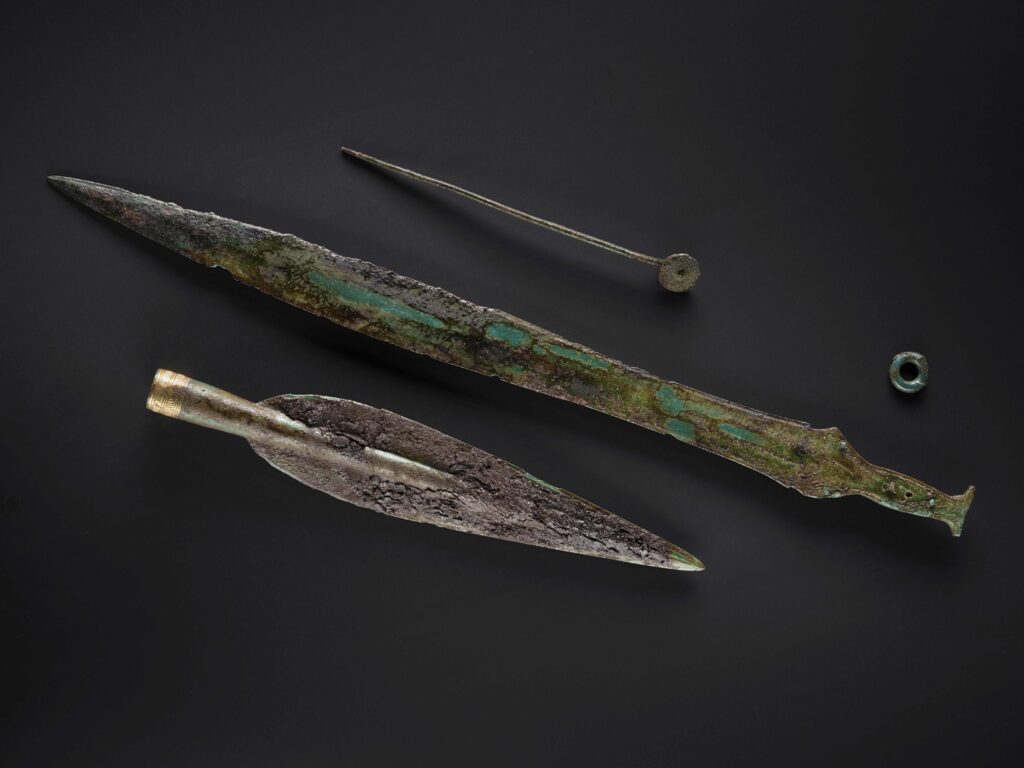
Through careful minute analysis of every strand of evidence, the organic remains as well as the metals, an enormous amount was revealed about the people who buried these hoards at the end of the Bronze Age.
The post-excavation analyses of finds recovered from Carnoustie and Rosemarkie revealed exceptional archaeology.
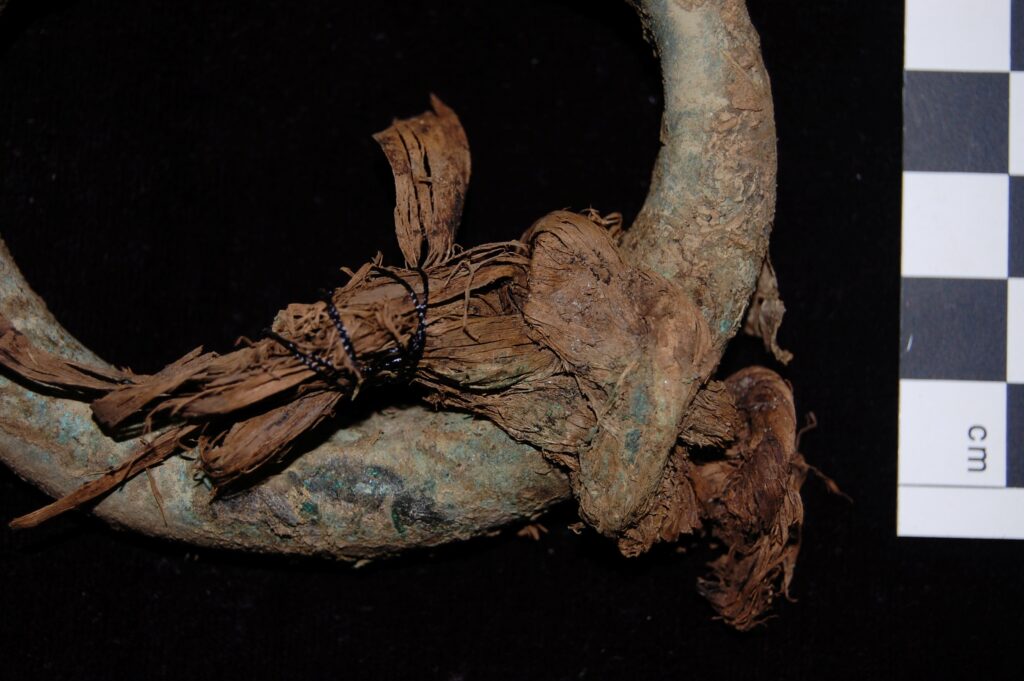
The organic remains such as the Carnoustie sword scabbard enabled radiocarbon dating of the Carnoustie hoard to 1118-924 BC, earlier than when traditional typologies would place it. While tree bast used to tie many of the Rosemarkie bangles together provided a secure radiocarbon date for the burial of the Rosemarkie hoard: 894-794 BC, at the very end of the Bronze Age.
The metallurgical analyses of both hoards revealed the extensive exchange networks with southern Britain, Ireland and the continent, from which Late Bronze Age metalworkers in Scotland ultimately sourced the materials they shaped into precious objects.
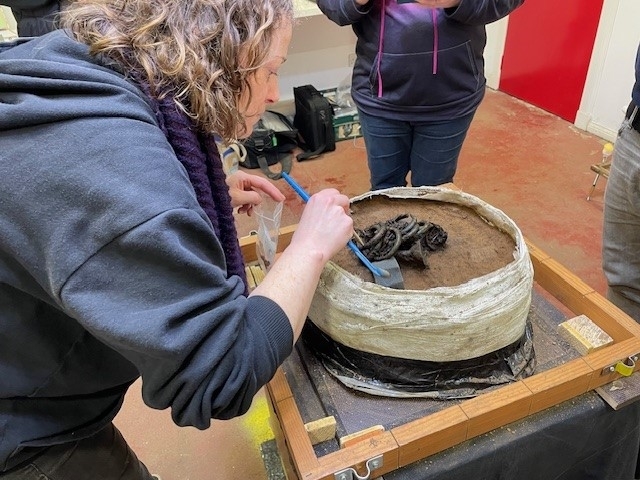
Intriguingly both hoards were buried close to contemporary Bronze Age settlements, leading the GUARD Archaeologists to examine the reasons why these hoards were buried in the first place. Unlike founders’ hoards or metalworkers’ stashes of damaged objects and fragments that could be recycled, or votive hoards of deliberately broken objects thrown into watery places with no chance (or apparent desire) of recovery, the Rosemarkie and Carnoustie hoards contained treasured items that were collected together, wrapped, and neatly buried for safekeeping close to a settlement where they could be guarded and easily retrieved when the time came.
The question, then, is not so much why they were buried, but why the time never came for these Bronze Age communities to retrieve their valuable belongings.
Voting closes on 9 February 2026. To vote, go to https://archaeology.co.uk/vote
The excavation reports – ARO60: Neolithic timber halls and a Bronze Age settlement with hoard at Carnoustie, Angus by Beverley Ballin Smith, Alan Hunter Blair and Warren Bailie; and ARO62: ‘A Hoard, Spear Moulds and a Bear, Oh my!’ a Late Bronze Age Settlement at Greenside farm, Rosemarkie by Iraia Arabaolaza, Rachel Buckley, Sam Williamson and Alun Woodward – are both freely available to download from Archaeology Reports Online.